From train station purgatories to 1970s Govan car dealerships, SAAS brings together new writing and performance with a rich, multi-layered showcase of raw emerging talent.
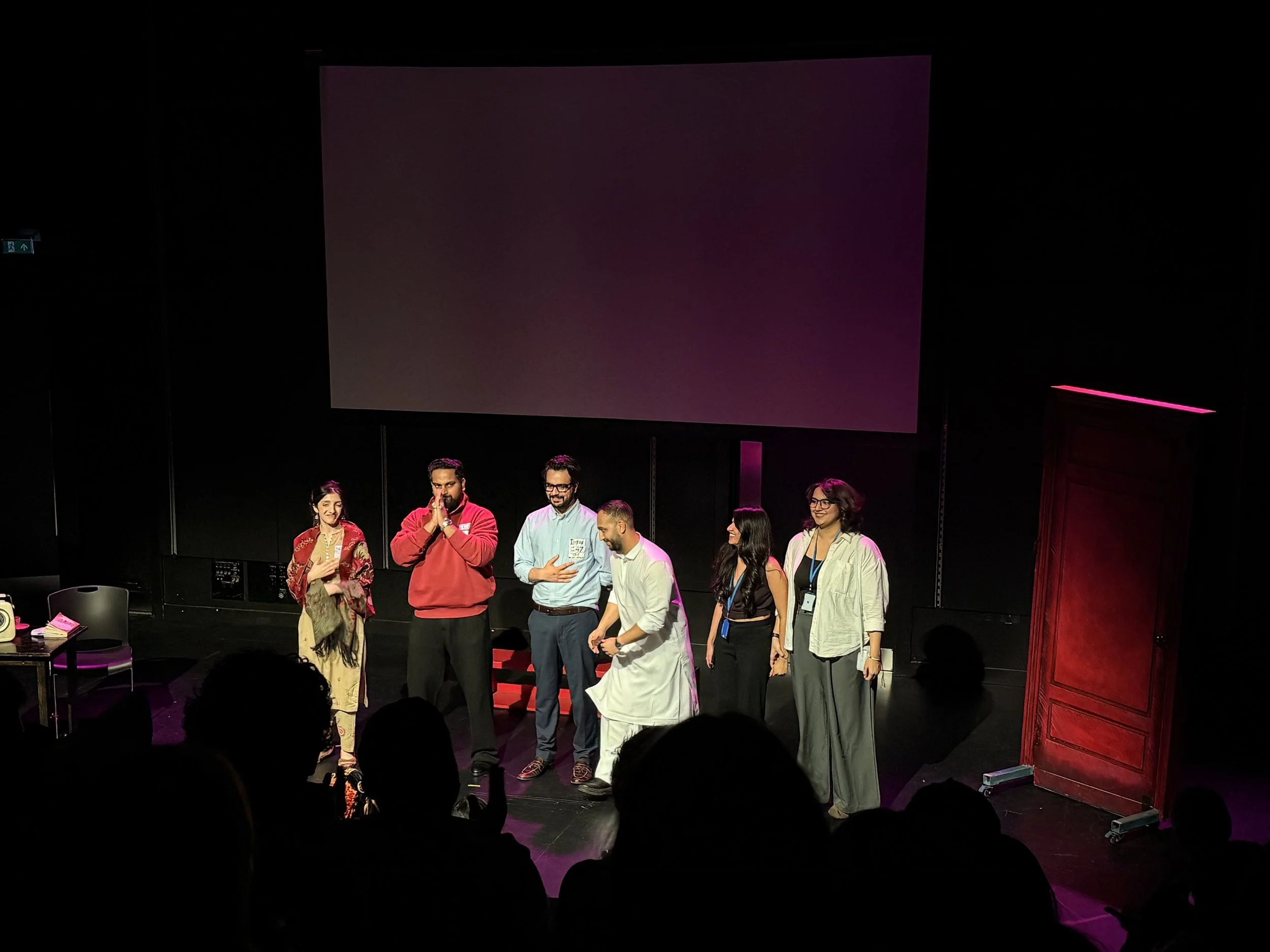
Curated and presented by South Asian Artists Scotland (SAAS) – a grassroots initiative founded by creatives Niloo-Far Khan and Dal Sabir – the New Sauce scratch night stands as a powerful testament to the necessity of dedicated spaces for diaspora voices across Scotland’s cultural landscape. Hosted in association with the National Theatre of Scotland and the Citizens Theatre, the evening brought together four distinct work-in-progress pieces spanning theatre, spoken word, and classical dance.
What made the night so resonant was its celebration of multi-layered Scottish identity. Theatre at its best bridges connections and welcomes all, and New Sauce demonstrated how vital it is to see varying perspectives on what it means to be a Scot today. The new Citizens Theatre space provided a fitting home for this exchange.
However, events of this nature require a reciprocal culture of care. Scratch nights are fundamental to artist development – they are rare spaces where audiences get to witness work in its rawest, most vulnerable stages. It was slightly disappointing to observe a small handful of audience members and participating artists failing to grant other performers the same respect they were afforded while on stage. Respecting the work of your peers by holding space – rather than talking, texting, or laughing in the stalls – is essential if community-led initiatives like this are to truly thrive.
That minor distraction aside, the sheer quality and potential of the work presented made New Sauce an inspiring showcase.
Uboor (Crossing): Between Departures by Ali Shan Sohail
Performed by: Wajahat Kashif, Momina Saleem, Abbas Aziz, and Ali Shan Sohail
Technical Support: Jannat Asad
Set in a surreal limbo resembling a train station, Uboor explores the terrifying yet liberating prospect of letting go. In this purgatory, three souls arrive dressed in their twenties – their most authentic physical selves. To pass through a mysterious red door into whatever comes next, each must surrender a core memory to a mysterious man in white listening to a radio. Refuse, and you remain trapped in this place until you are ready to offer your memory.
Ali Shan Sohail’s writing beautifully balances existential dread with sharp domestic comedy. We meet three distinct archetypes: a sassy, judgment-laden elder woman finally finding calm away from a lifetime of stress; a narcissistic, charismatic young man unburdening himself of the need for his father's validation; and a workaholic father who realises his entire drive was built on love for his daughter.
"Say the right thing while you can, bēṭā. Don't wait for a door like this."
The piece poses an agonising philosophical question: Who are we without the building blocks of our lives? By surrendering memories of regret, grief, achievement, or even love, do we lose our identity, or do we finally find peace? Uboor is a deeply moving, beautifully crafted exploration of mortality that leaves the audience questioning what single memory they would hold onto – and what that choice says about who they are.
These Hands Are Utensils Too by Deergha Chennubotia
Taking to the stage with precision and grace, Indian spoken word poet Deergha Chennubotla delivered These Hands Are Utensils Too – a searing, witty, and deeply reflective critique of diaspora identity, microaggressions, and double standards.
Chennubotla’s writing sits at the intersection of celebration and accountability. She flips common racist tropes and tourist performativity on their head with razor-sharp satire, addressing everything from performative backpacking to Western hygiene double standards.
What set this performance apart was its linguistic fluidity. Like a river diverging and reconnecting, her shifting between languages wrapped around the room, ensuring every audience member felt the current of her words regardless of fluency. It functioned simultaneously as a mirror turned toward the audience and a deeply personal reflection on identity and belonging.
Dashaavatar by Aishwarya Patil
An internationally trained Bharatanatyam artist, Aishwarya Patil brought a electrifying physical energy to the stage with Dashaavatar, a classical dance piece depicting the ten avatars of Lord Vishnu.
Patil’s performance was defined by incredible physical discipline and expressive storytelling (abhinaya). Through razor-sharp footwork and fluid shifts in posture, she transformed the stage, effortlessly embodying distinct mythological figures – moving between quiet vulnerability, regal authority, and terrifying divine powe, to name a few. Supported by dynamic lighting cues that punctuated key shifts in tone, the piece demonstrated how classical forms can transcend language and cultural background; even those unfamiliar with Hindu lore were able to follow the emotional arc of cosmic balance, devotion, and dharma. It was a commanding, energetic presence which highlighted the rich narrative possibilities of physical theatre.
Only Fools and Punjabis by Zara Janjua
Performed by: Zara Janjua and Atta Yaqub
Closing the evening was Only Fools and Punjabis, a warm, hilarious work-in-progress by broadcaster and comedian Zara Janjua. Marking her theatrical writing and stage performance debut, the piece draws on the true story of Janjua's Pakistani father running a second-hand car dealership in 1970s Govan.
Opening with Margaret Thatcher’s infamous rhetoric surrounding immigration, the play quickly shifts to the vibrant, chaotic world of United Motors. We watch Abu deal with motors and trade playful, Sitcom-esque banter with his Northern Irish associate, Bertie (played with brilliant comic timing by Janjua). Behind the hustle lies high stakes: Abu is working frantically to "buy his freedom" and avoid a forced arranged marriage back in Pakistan.
When an ex-military woman enters the shop to sell her car, a tender, flirtatious dynamic unfolds. Breaking the fourth wall, Janjua playfully acknowledges the surreal feeling of acting out the exact moment her parents met. Paying more for the car than it was worth turned out to be the smartest sale Abu ever made – leading to a life, a family, and a home in Glasgow.
While the background music occasionally threatened to drown out key monologues, and the static screen logo felt slightly more like a TV broadcast than live theatre, the piece's heart and cross-cultural warmth shines through effortlessly. It is a joyous story of class, ambition, and fate that promises a very bright future.
Final thoughts
The evening ended with some chats & pakora bringing together the audience as a community to share their stories and thoughts. The evening was curated with such care and passion, whilst keeping the buzz of a scratch alive. New Sauce beautifully showcased a slice of the rich, complex tapestry of South Asian storytelling in Scotland today. SAAS, alongside the National Theatre of Scotland and the Citizens Theatre, have laid down an essential foundation for new writing and we at Under the Rug look forward to seeing more events like this in their spaces in the future!
Keep an eye on @saartistscotland for future developments and upcoming opportunities.